

Boats, Performance and Purpose: Understanding the Role of Quality on the Water

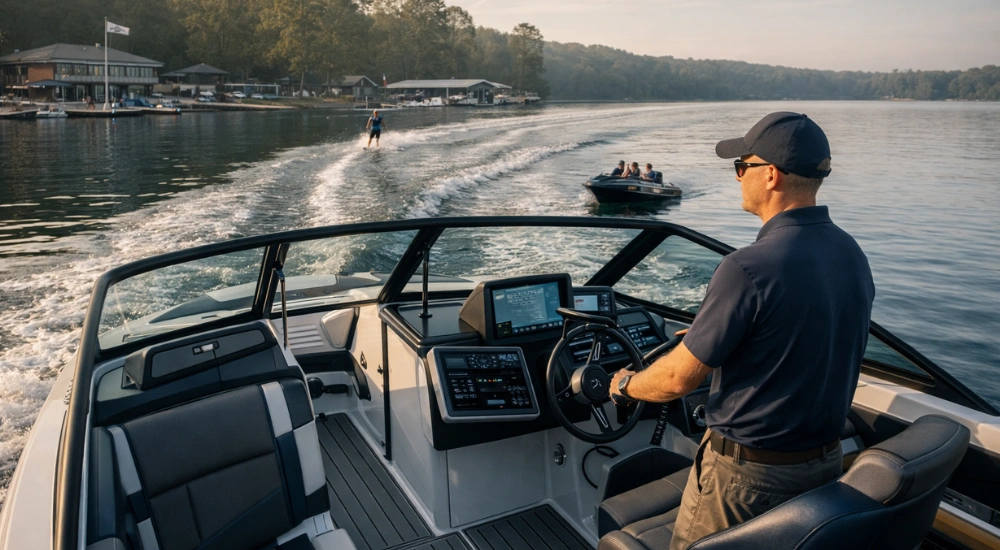
Boats have long been associated with leisure and lifestyle, but within the context of sport, performance and facility planning, they represent something far more strategic. Whether supporting water sports, coaching environments, events or premium leisure destinations, the quality and capability of a boat directly influences outcomes on the water. For WSL Sport & Leisure, whose expertise centres on performance-led environments, equipment and infrastructure, boats are a critical component within a wider system rather than a standalone purchase.
Understanding how boats contribute to performance, safety and user experience is essential for organisations and individuals operating in water based sport and leisure settings.
Boats as performance equipment
In a sports context, a boat should be viewed in the same way as any other piece of performance equipment. It must deliver consistency, predictability and control under real world conditions. For activities such as waterskiing, wakeboarding, coaching support or safety cover, the boat becomes an active part of the performance environment.
Poorly specified or unreliable boats introduce variability. Inconsistent speed control, unstable handling or limited visibility all place additional cognitive and physical demands on users. This detracts from performance and increases risk. High quality boats, by contrast, create stable platforms that allow athletes, coaches and operators to focus on their primary objectives.
At WSL Sport & Leisure, we see strong parallels between marine equipment and land based sport infrastructure. Just as a high performance training surface supports efficient movement, a well engineered boat supports efficient performance on the water.
Engineering and real world conditions
Water is an unpredictable environment. Wind, temperature, load changes and usage patterns all affect how a boat performs. This makes engineering quality particularly important. Hull design, weight distribution and propulsion systems must work together to deliver control and stability across a wide range of conditions.
In performance led boating environments, predictability is key. Operators need confidence that the boat will respond consistently, whether supporting high speed activity or low speed manoeuvring. This principle is equally familiar within sport facility design, where environments must perform reliably regardless of usage intensity or external factors.
WSL Sport & Leisure applies this thinking when advising on equipment and facility solutions. Performance must be designed for reality, not idealised scenarios. Boats that perform well only in calm or lightly loaded conditions quickly become limiting in professional or high use settings.
User experience and functional design
Beyond engineering, the internal design of a boat plays a crucial role in how it is used. Layout, seating, storage and control positioning all affect efficiency and safety. In sport and leisure environments, intuitive design reduces friction and supports better decision making.
For example, clear sightlines and accessible controls are essential when towing athletes or managing groups on the water. Logical layouts reduce unnecessary movement and help operators maintain focus. These design considerations directly influence outcomes, particularly during extended sessions or busy operational periods.
WSL Sport & Leisure places strong emphasis on user centred design across all projects. Whether developing a gym, aquatic centre or outdoor facility, the goal is to create environments that feel natural to use. Boats are no different. The best designs fade into the background, allowing users to concentrate on performance and enjoyment.
Durability and lifecycle value
Marine environments are demanding. Exposure to water, UV, temperature variation and mechanical stress places constant pressure on materials and construction. For sport and leisure operators, durability is therefore a fundamental consideration.
Frequent maintenance, downtime or early replacement disrupts programmes and increases costs. Investing in boats built with long term performance in mind supports operational stability and protects reputation. At WSL Sport & Leisure, we consistently encourage clients to assess lifecycle value rather than upfront cost alone.
This approach mirrors best practice across sport infrastructure. Durable surfaces, robust equipment and well planned facilities deliver better value over time, even if initial investment is higher. Boats that retain performance and safety over years of use align with this philosophy.
Boats within the wider facility environment
Boats rarely operate in isolation. They are supported by docks, storage systems, launch areas and surrounding facilities. The specification of a boat therefore has implications for wider infrastructure planning.
For example, larger or higher performance boats may require reinforced docking solutions, improved access routes or enhanced safety provisions. Understanding these relationships early allows for more cohesive facility design and smoother operation.
WSL Sport & Leisure’s integrated approach considers how equipment choices influence the broader environment. By aligning boats with appropriate infrastructure, organisations can create safer, more efficient and more enjoyable water based facilities.
Premium experiences and brand perception
In many sport and leisure settings, boats contribute directly to brand perception. High quality equipment signals professionalism, attention to detail and commitment to user experience. This is particularly important in premium leisure destinations, member based clubs and performance focused venues.
Users increasingly expect environments that feel considered and well designed. Boats that look, feel and perform to a high standard reinforce this expectation. However, premium positioning only works when it is supported by real performance and reliability.
WSL Sport & Leisure works with clients who want to build credibility through substance rather than superficial upgrades. Boats are one of the most visible elements of a water based environment, making their specification an important strategic decision.
Boats play a central role in shaping performance, safety and experience on the water. When viewed as performance equipment rather than lifestyle accessories, their importance within sport and leisure environments becomes clear.
Engineering quality, functional design and durability all contribute to better outcomes and long term value. Just as with sport facilities and training environments, success depends on making informed, quality led decisions.
At WSL Sport & Leisure, we support clients in creating integrated performance environments where equipment and infrastructure work together seamlessly. If you are developing or upgrading a water based sport or leisure facility and want to ensure your boating provision supports your performance goals, our team is ready to help.
Contact WSL Sport & Leisure today to discuss how we can support your project with expert insight, quality driven planning and performance focused solutions.