ATV or Side-by-Side? Choosing the Right Machine for Work, Hunting and the Trails

The wrong off-road machine usually reveals itself at the worst possible moment. It may happen when the trail narrows between the trees, when a load of fencing supplies will not fit, or when a second rider has nowhere comfortable to sit.
The same machine that feels perfect on an open Manitoba property could become awkward on a wooded route near Kenora. Choosing between an ATV and a side-by-side is therefore not simply about which one looks tougher. It comes down to how, where and with whom you intend to ride.
Start With the Job, Not the Engine Size
Before comparing horsepower, suspension or accessories, picture an ordinary day with the machine.
Will you be checking property lines, moving tools, travelling to a hunting camp or spending weekends exploring trails? Will you usually ride alone, or will someone regularly join you? How much equipment must come along?
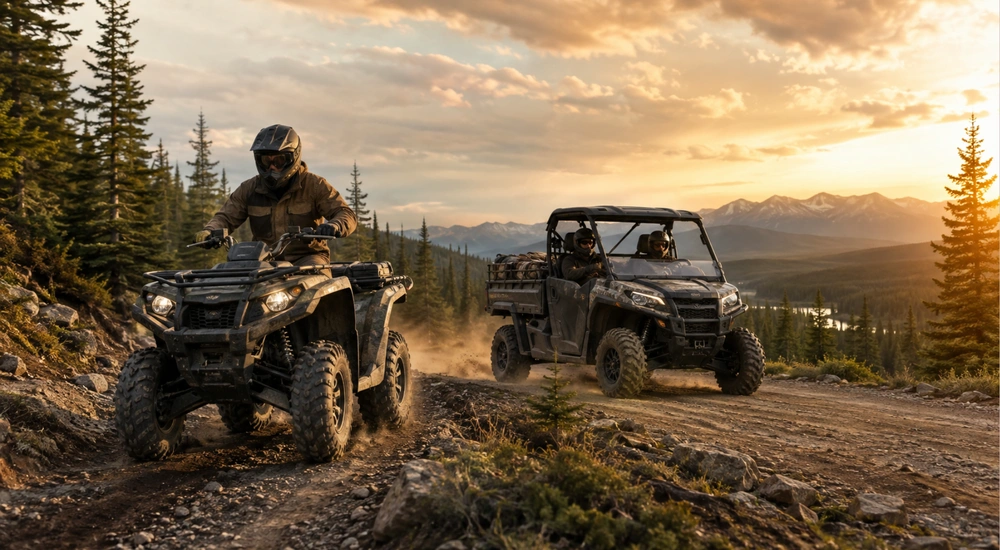
An ATV has a compact design, a straddle-style riding position and handlebar controls. A side-by-side has a more vehicle-like setup, typically using a steering wheel, dedicated passenger seating and additional cargo space.
Both can handle demanding off-road conditions, but they solve different problems.
When an ATV Makes More Sense
An ATV is often the stronger choice when manoeuvrability matters most. Its smaller footprint suits narrow trails, tight bush and areas where turning space is limited. Riders who need to cover ground while carrying a manageable amount of equipment may appreciate how direct and responsive an ATV feels.
For property work, an ATV can be useful for checking fences, travelling between remote sections of land and towing compatible lighter equipment. It also requires less room in a garage, shed or trailer, which can make storage and transport considerably easier.
Hunters who usually travel alone may prefer an ATV for reaching confined areas where a wider vehicle would become cumbersome. Front and rear racks, storage boxes and model-compatible accessories can provide room for supplies, provided the machine’s stated load limits are respected.
When a Side-by-Side Earns Its Space
A side-by-side becomes more practical when the day involves passengers, bulky equipment or repeated hauling.
Its seating arrangement allows people to travel together in seats designed for that purpose. Many utility-focused models also include a rear cargo bed, creating space for tools, feed, firewood, camp supplies or hunting equipment. Manufacturer lineups can include two-person, three-person and larger crew-style configurations, depending on the intended use.
For farms, acreages and larger properties, that additional capacity can reduce the number of trips needed to complete a job. A side-by-side may also feel more comfortable over longer distances, particularly for drivers who prefer a conventional seated position and the option of fitting a roof, windshield or other cab accessories.
At hunt camp, the larger platform makes sense when two or more people need to travel together or when the return journey includes considerably more equipment.
The trade-off is size. Wider access, more storage room and an appropriate trailer or transport setup all need to be considered.
Which One Is Better on the Trails?
There is no universal winner.
An ATV can feel more engaging on narrow, technical routes where precise positioning and quick direction changes matter. It can also reach places that may be too restricted for a larger vehicle.
A side-by-side may be better suited to longer recreational rides, shared outings and days when passenger comfort, storage and carrying capacity are more important than finding the tightest possible route.
Check the width and access rules of the trails you use before buying. Ground clearance, suspension, tires and four-wheel-drive capability matter, but they should be considered in relation to your actual terrain rather than treated as impressive specifications on their own.
Make the Decision Around Real Use
Think honestly about your typical passenger count, cargo requirements, route width, storage space and transport method. Decide whether work, hunting access or recreational riding will account for most of the machine’s use.
It is also worth sitting in or on several models before deciding. Check visibility, control reach, riding position, entry and exit, and how easily the storage areas can be accessed.
WSL Sport & Leisure offers a current selection of ATVs and side-by-sides through its Winnipeg and Kenora locations. The team can help you compare machines based on the work you need to complete, the trails you ride and the accessories that would make ownership more practical.
A good purchase should make the tenth outing easier, not merely make the first one exciting.